
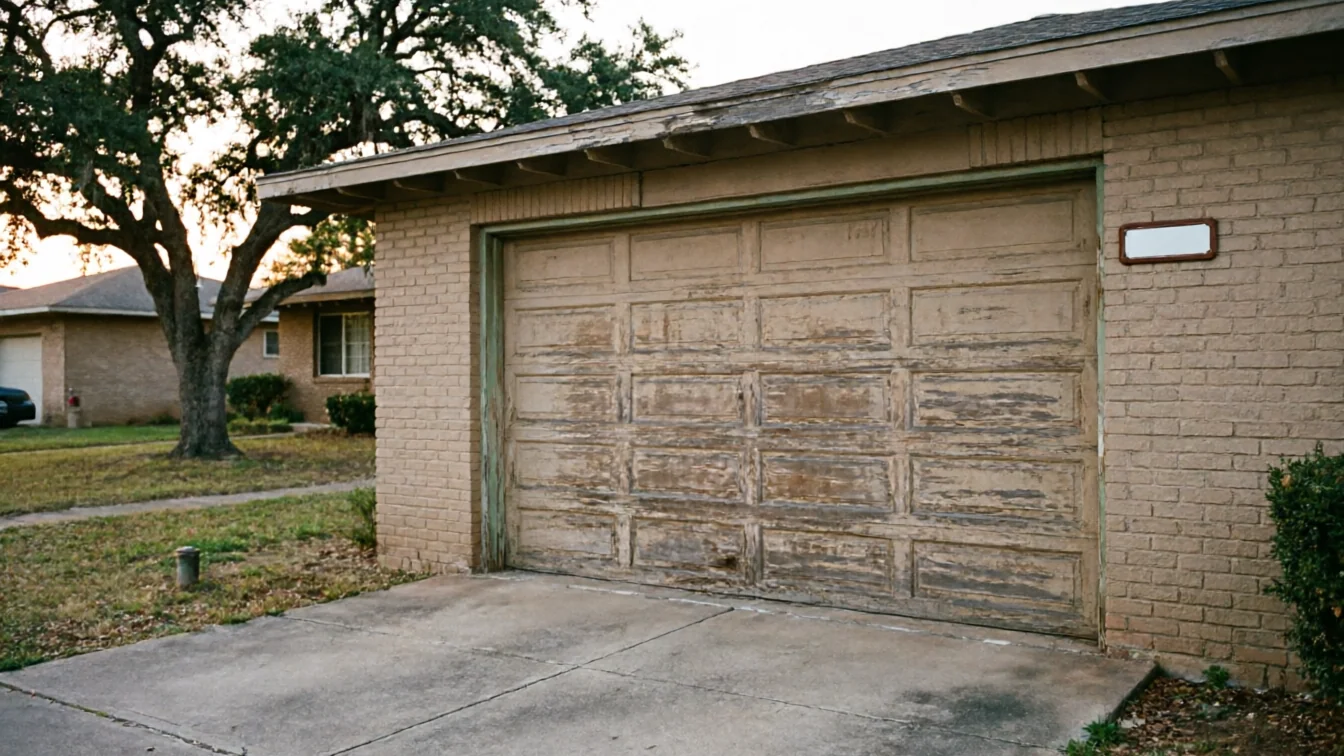
Is Your Older Anna Garage Door Worth Fixing?
In Anna, most garage doors date to the 1980s-90s building boom.
Read moreAnna homes mostly date from the 1980s and 90s, with older stock back to 1969. Here's what grinding, popping, and banging actually mean on that hardware.
Local detail
Most of the housing in this service area went up between 1969 and 2006, with the bulk of it dating to the 1980s and 90s, spread across fourteen named pockets rather than one subdivision built all at once. That matters for noise because it means the hardware underneath these doors isn't uniform. A house from the mid-80s likely still has its original torsion spring and a steel track that's been painted over a few times. A house closer to 2006 probably has a lighter-gauge door and an opener with a worn drive gear instead of worn springs. The climate here is cold-moderate, not harsh winter, so you don't get the deep-freeze metal contraction that cracks springs outright further north, but you do get seasonal swings that tighten tolerances on rollers and hinges that were never greased correctly in the first place. A door that's quiet in August and groans in January isn't broken by the cold - it's telling you the grease dried out years ago and the cold just exposed it. Age of the house tells you roughly what's inside the door. Noise tells you what's gone wrong with it.
The area
The common mistake on a door from this era is treating every noise the same way - spraying WD-40 on it and calling it fixed. WD-40 is a solvent, not a lubricant; it strips what grease is left on rollers and hinges and the squeak comes back worse in a few weeks. On 1980s and 90s doors specifically, the other mistake is ignoring a rhythmic thump that lines up with one spot on the track. People assume it's the opener because that's the newest part, when it's usually a roller that's worn oval after twenty-plus years of the same door cycling twice a day. We also see owners wait on a grinding torsion spring because the door still opens fine - on a house this age, that spring has usually done tens of thousands of cycles already and grinding is the sound of the coil wearing against itself right before it lets go. It won't ease up on its own. The honest limit here: if the noise is coming from the opener's gear and motor housing rather than the door hardware, that's often a straight parts swap, and sometimes cheaper to replace the opener outright than to source a thirty-year-old motor part.
What we find
A noisy garage door on a house built in this window is almost always one of four things: a dry roller track, a worn roller, a spring losing tension, or an opener gear stripping under load. The age spread here - 1969 to 2006 - means we're not dealing with one failure mode across the board. Older doors in the mix are more likely to have steel rollers on steel track, which is louder by design once the grease is gone. Doors built closer to the 2006 end of that range often came with nylon rollers, which run quieter but crack with age and chatter right before they fail. With roughly 10,249 owner-occupied houses across this area, most of them sit somewhere in that thirty-plus-year range, which is long enough for original hardware to be well past its expected life even if it's never been touched. The noise is the symptom. The actual problem is a part that's reached the end of what it was built to do, and no amount of lubricant buys back years already used up.
How we work
In a cold-moderate climate, you don't get the extreme swings that snap springs in a week of hard freeze, but you do get the door working harder for a few months a year. Cold air thickens old grease, so a roller or hinge that was already marginal in October starts complaining in December. Garage doors on houses from the 1980s and 90s, many running original torsion springs decades past a reasonable service life, are the ones most likely to show their first real noise right as temperatures drop - not because the cold damages the spring, but because reduced flex in cold steel makes an already-weak coil work closer to its limit. Spring and fall, when temperature swings are bigger day to night, is when loose hardware - bolts, hinges, track brackets - tends to announce itself with a rattle that wasn't there in the steady heat of summer. None of this requires replacing the door. It requires listening to which part of the cycle the noise happens in, and matching that to hardware that's old enough to be due.
Questions
On a door this age, grinding usually means the torsion spring coil is wearing against itself near the end of its life. It's not an emergency the first time you hear it, but it won't fix itself, and springs that let go under tension are the single most dangerous failure point on a residential door.
Cold thickens old grease and tightens tolerances on rollers and hinges that are already marginal. The cold doesn't cause the wear - it just makes worn hardware work harder, so problems that were quiet in summer show up once temperatures drop.
Not WD-40 - it's a solvent and strips remaining grease rather than replacing it. A proper lithium or silicone-based garage door lubricant on hinges and rollers helps, but a spring that's grinding needs tension work, not spray.
Most houses in this area date from the 1980s through the mid-2000s, and original torsion springs and steel rollers from that era are typically well past a reasonable service life even without visible damage. Age alone is a reason to have the hardware checked, noise or not.
Recommendation
More garage door guides for Anna homeowners.
In Anna, most garage doors date to the 1980s-90s building boom.
Read more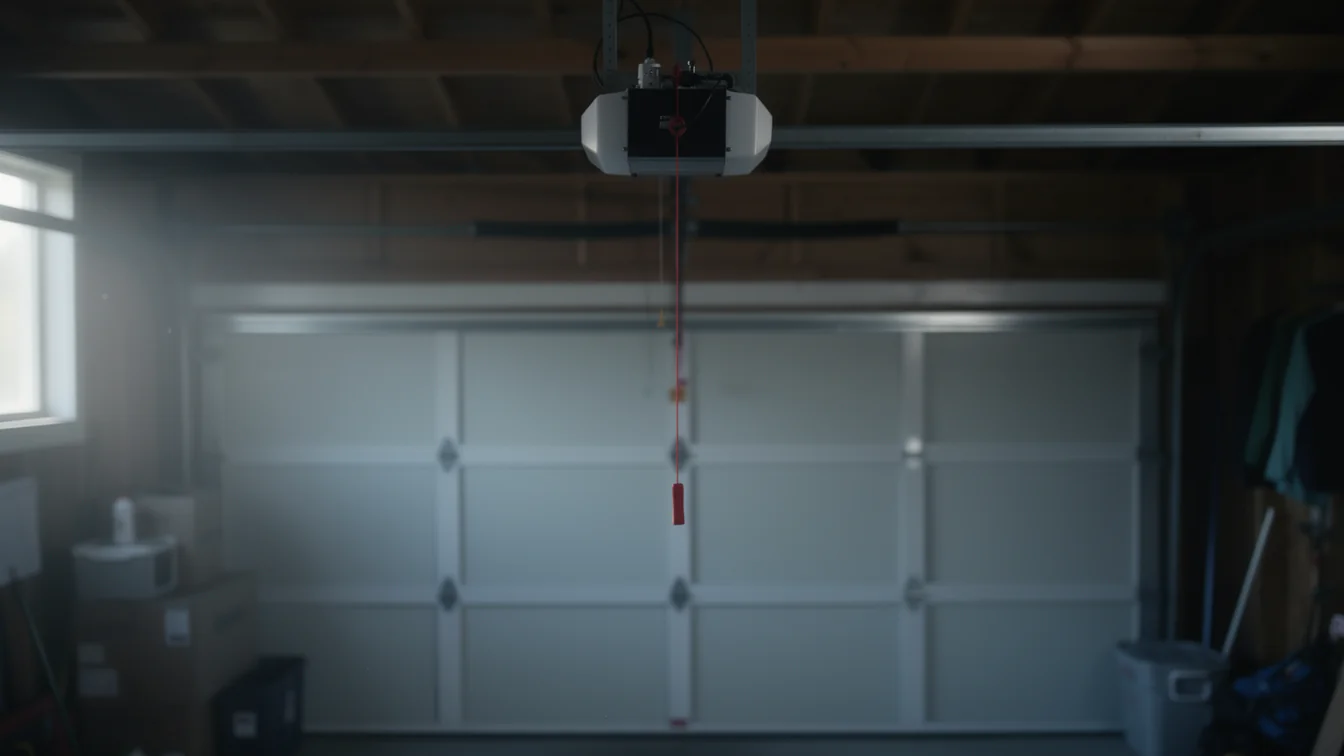
Anna homes built 1969-2006 face specific opener and power-cut problems in a cold-moderate climate.
Read more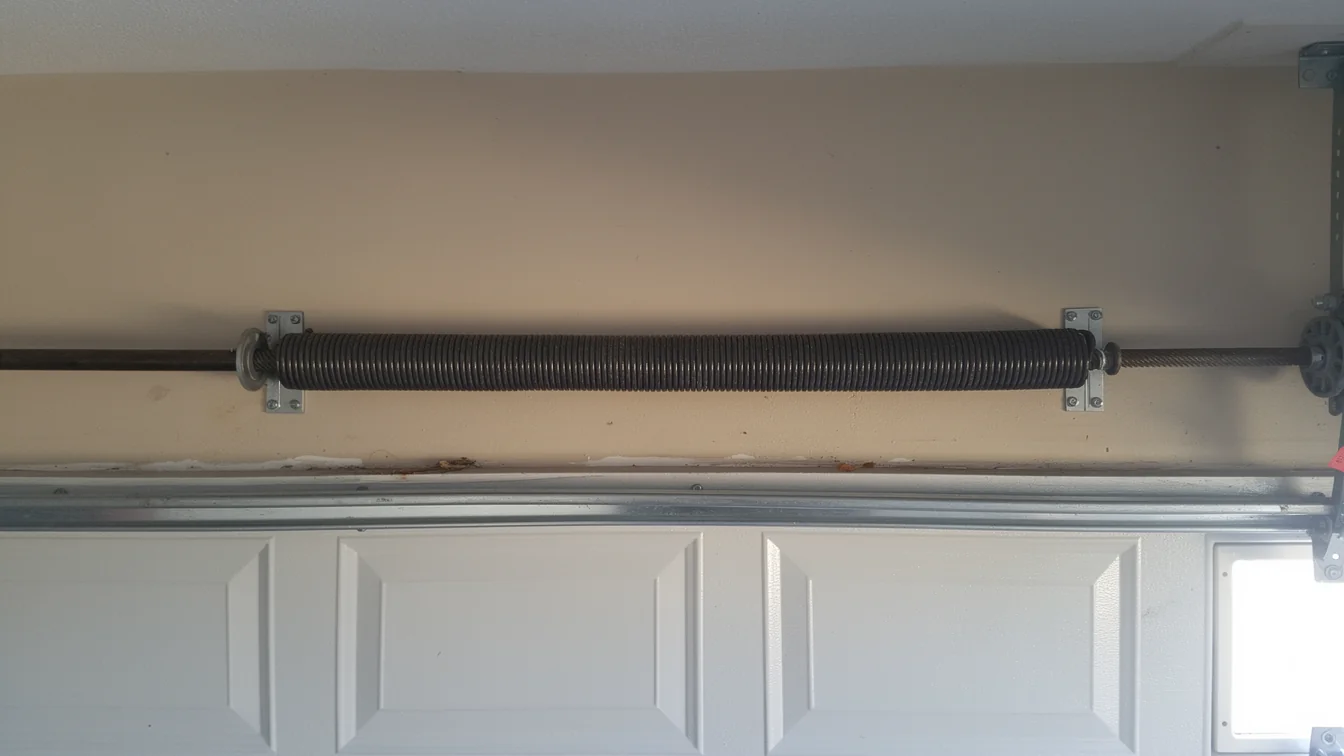
Anna homes built 1969-2006 run original springs on torsion hardware that wasn't sized for sub-freezing mornings.
Read moreReady when you are
Anna Garage Door Pros repairs and installs garage doors, springs and openers in Anna, TX and the surrounding area.